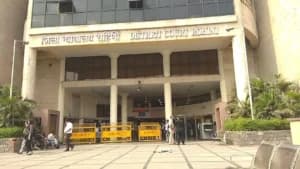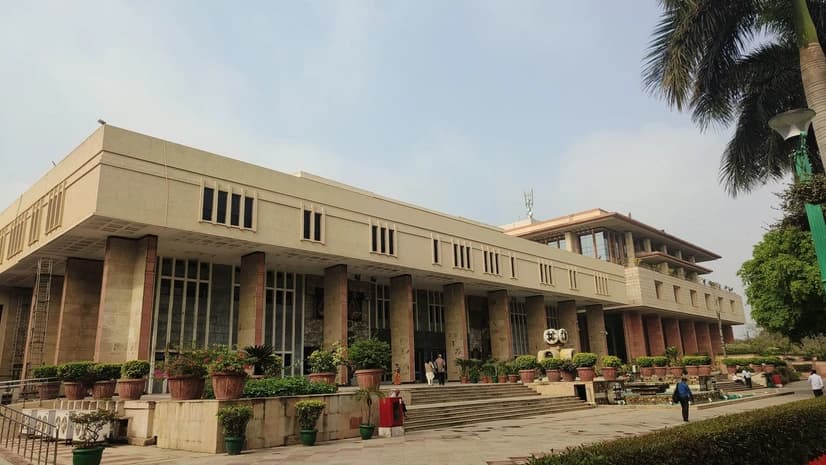
A packed courtroom at Rouse Avenue on Thursday saw a familiar debate return - who exactly gets a seat at the prosecution table. The Delhi District Court dismissed a criminal revision filed by Pune-based filmmaker V.R. Kamalapurkar, who wanted to intervene in a long-running CBI case over alleged misuse of government funds for a film on Lokmanya Tilak. The court was clear: sympathy aside, the law draws firm lines on who can step in.
The order was passed by Hasan Anzar, Special Judge (PC Act), sitting at the Delhi District Court.
Background
The case itself dates back to 2015. The Central Bureau of Investigation registered an FIR after the Ministry of Culture complained that filmmaker Vinay Dhumale had allegedly misused ₹2.5 crore sanctioned for producing a film on Lokmanya Bal Gangadhar Tilak.
Read also:- Delhi High Court Ends Criminal Case Over Family Land Mutation: Cheating, Forgery Charges Found Unsustainable
According to the prosecution, the film was substantially similar to a Doordarshan serial earlier made by Dhumale, despite strict terms that such content would belong exclusively to the government broadcaster. A forensic report later found overlapping footage between the serial and the film.
Years after the charge sheet was filed, V. R. Kamalapurkar moved the trial court seeking permission to “assist” the prosecution. He claimed that his name had been wrongly used in the film credits and that his RTI queries had helped expose the alleged fraud.
Read also:- Unnao Rape Case Reaches Supreme Court Again as Plea Challenges Delhi High Court’s Suspension
Court’s Observations
The trial court had earlier refused Kamalapurkar’s plea, holding that he was neither the complainant nor the victim. Challenging that order, Kamalapurkar argued before the revisional court that he deserved a voice because he had first flagged the issue and had suffered reputational harm.
Judge Anzar, however, was not persuaded. “A meaningful reading of the charge-sheet clearly shows that the alleged loss, if any, was suffered by the Ministry of Culture or Doordarshan,” the bench observed, adding that merely being named in film credits or cited as a witness does not make someone a “victim” under criminal law.
The court also rejected the claim that Kamalapurkar was the “first informant”. The judge noted that the FIR was registered only after a formal written complaint by a Joint Secretary of the Ministry, not on the basis of any police complaint by the revisionist.
At one point, the bench remarked that allowing witnesses to intervene would blur roles and could even turn them into “quasi-prosecutors”, something criminal trials are not meant to encourage.
Read also:- Delhi High Court Ends Criminal Case Over Family Land Mutation: Cheating, Forgery Charges Found Unsustainable
Decision
Finding no illegality or perversity in the trial court’s reasoning, the revisional court upheld the earlier order and dismissed the revision petition. The judge concluded that the application for intervention had no legal footing and that the prosecution must remain under the control of the public prosecutor alone. The trial court record was directed to be sent back, bringing the intervention chapter to a close.
Case Title: V. R. Kamalapurkar vs Central Bureau of Investigation & Anr.
Case No.: Criminal Revision No. 29/2025 (CNR No. DLCT11-000723-2025)
Case Type: Criminal Revision Petition (against dismissal of intervention application)
Decision Date: 26 December 2025