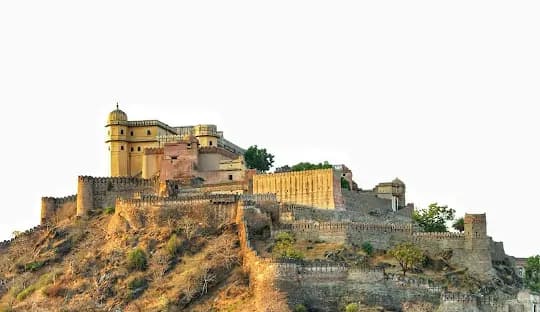
On a packed Thursday morning, the Supreme Court finally put clarity to a question that has troubled environmental cases for years -what exactly counts as the Aravali Hills. In a detailed judgment, the court accepted the Centre’s scientific definition of the Aravali Hills and Ranges and ordered a complete pause on fresh mining leases across four states until expert-backed plans are ready. The decision, long awaited in green circles, came as a strong signal that the country’s oldest mountain system will no longer be left to vague interpretations.
Background
The issue arose from the decades-old T.N. Godavarman Thirumulpad environmental case, where the court has repeatedly stepped in to protect forests and fragile ecosystems. Mining in the Aravalis - stretching through Delhi, Haryana, Rajasthan and Gujarat - had become a grey area due to the absence of a uniform definition. Different states, and sometimes even departments, interpreted “Aravali land” differently, allowing mining to creep in through legal gaps. To address this, the Ministry of Environment, Forest and Climate Change (MoEF&CC) had formed an expert committee to propose a scientific and uniform definition.
Read also:- Bombay High Court Says 'Technical Breaks' Can't Deny Maternity Leave, Orders Maharashtra Medical College to Pay Assistant Professor Dues
Court’s Observations
Writing the 29-page judgment, Chief Justice B.R. Gavai said the court was accepting the committee’s recommendations in full. The bench, also comprising Justices K. Vinod Chandran and N.V. Anjaria, observed that a clear definition was essential for conservation and proper land-use decisions.
The court recorded that an “Aravali Hill” would mean any landform in notified Aravali districts rising 100 metres or more from the surrounding terrain. An “Aravali Range”, the bench noted, would be formed when two or more such hills lie within 500 metres of each other. The judges remarked that this approach was scientific, practical and difficult to manipulate.
Read also:- Kerala High Court refuses bail to Palakkad man accused of bus harassment, says grave allegations block extraordinary relief under new
Calling the Aravalis a “green barrier” against the eastward spread of the Thar desert, the bench observed that unchecked mining had serious implications for biodiversity, groundwater and climate resilience. “We further accept the recommendations with regard to the prohibition of mining in core or inviolate areas,” the court noted, making it clear that ecological protection would take priority.
Decision
The Supreme Court directed that no new mining leases shall be granted in the Aravali Hills and Ranges until the Management Plan for Sustainable Mining (MPSM) is finalised by the MoEF&CC in consultation with the Indian Council of Forestry Research and Education. Existing mines may continue, but only in strict compliance with the committee’s recommendations. Authorities were also asked to clearly identify zones where mining would be completely barred or allowed only in rare, scientifically justified cases. With this, the court closed a long-standing gap by laying down firm ground rules for the future of the Aravalis.
Case Title: In Re: Protection and Definition of Aravali Hills and Ranges
Case No.: Suo Motu Proceedings in T.N. Godavarman Thirumulpad v. Union of India (Environmental Matter)
Case Type: Suo Motu Environmental / Forest Conservation Case
Decision Date: November 21, 2025